IN
NL
Temporal misalignment Natural rhythm Moisture as time Sensory translation
I Look at Acorns in My Time
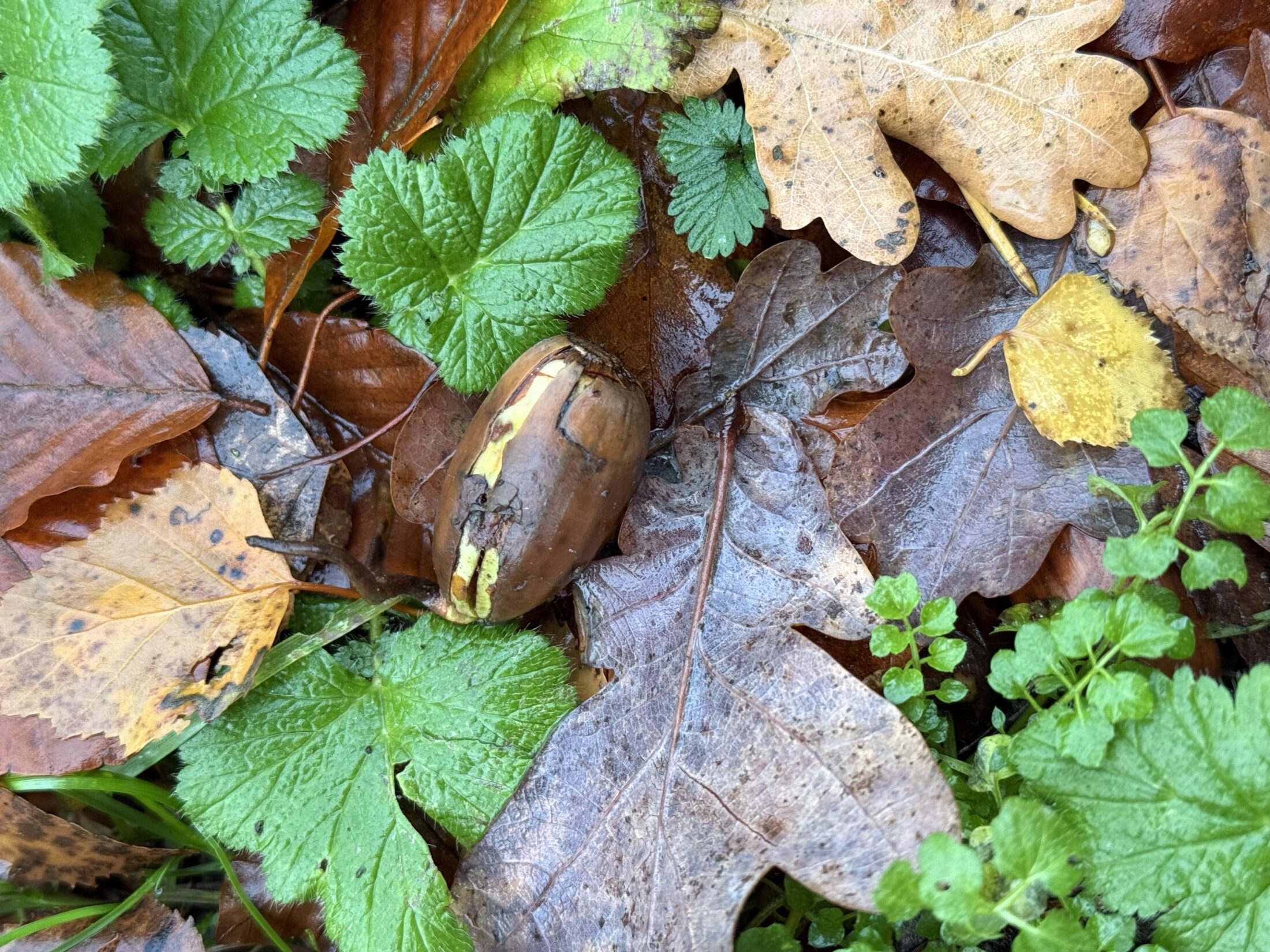
When I looked at the acorns I had collected, I imagined and simulated in my mind how I would interact with them. But when I arrived at the site, the acorns on the tree had almost all fallen, and the ones on the ground had already split open on their own. They had left me. In my understanding, I always assumed seeds would only crack underground. All of this was beyond my imagination. That moment made me feel humbled and small, and made me aware of the limits of my perception: we tend to think everything is frozen in the moment we see it, but nature is always moving forward in its own rhythm.
The collected acorns, with their hard shells, kept me from seeing the changes inside. In the temperature I was comfortable with, they were losing moisture. Human fragmented memory and the acorn’s sealed shell created a temporal mismatch between us.
This repositioned me: it’s not about who is behind or who needs to catch up. I was wrong to see the acorn’s time through my own time. It made me realize that every species has its own time. These times don’t need to be synchronized, we just need to be respected for our difference.
Trying to enter the acorn’s time, accompanying its possibilities
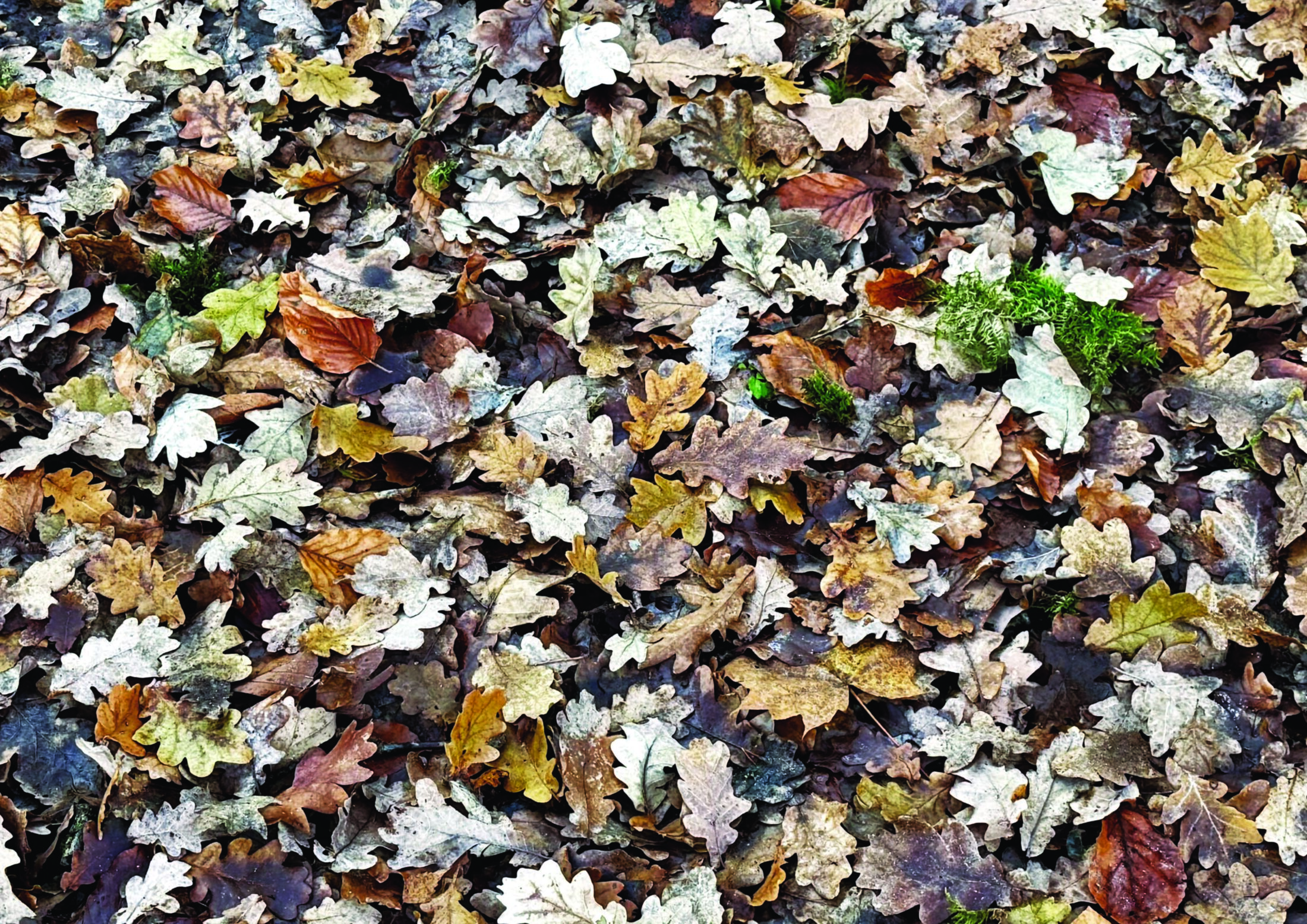
In the familiar place, I could no longer find the acorns. They were covered by fallen leaves. Curious, I lifted the leaves and found they were growing well. I learned that red acorns need to experience a cold period to activate germination, but they cannot be frozen. So fallen leaves became their blanket.I covered them back up and did not disturb them.
I created different ecological environments for the acorns: soil, refrigerator, water, and table. The first three were sealed to lock in the acorns’ moisture. A month later, they showed four completely different states: sprouting, dormancy, mold, and drying. Each state surprised me. Acorns have more vitality than I imagined.
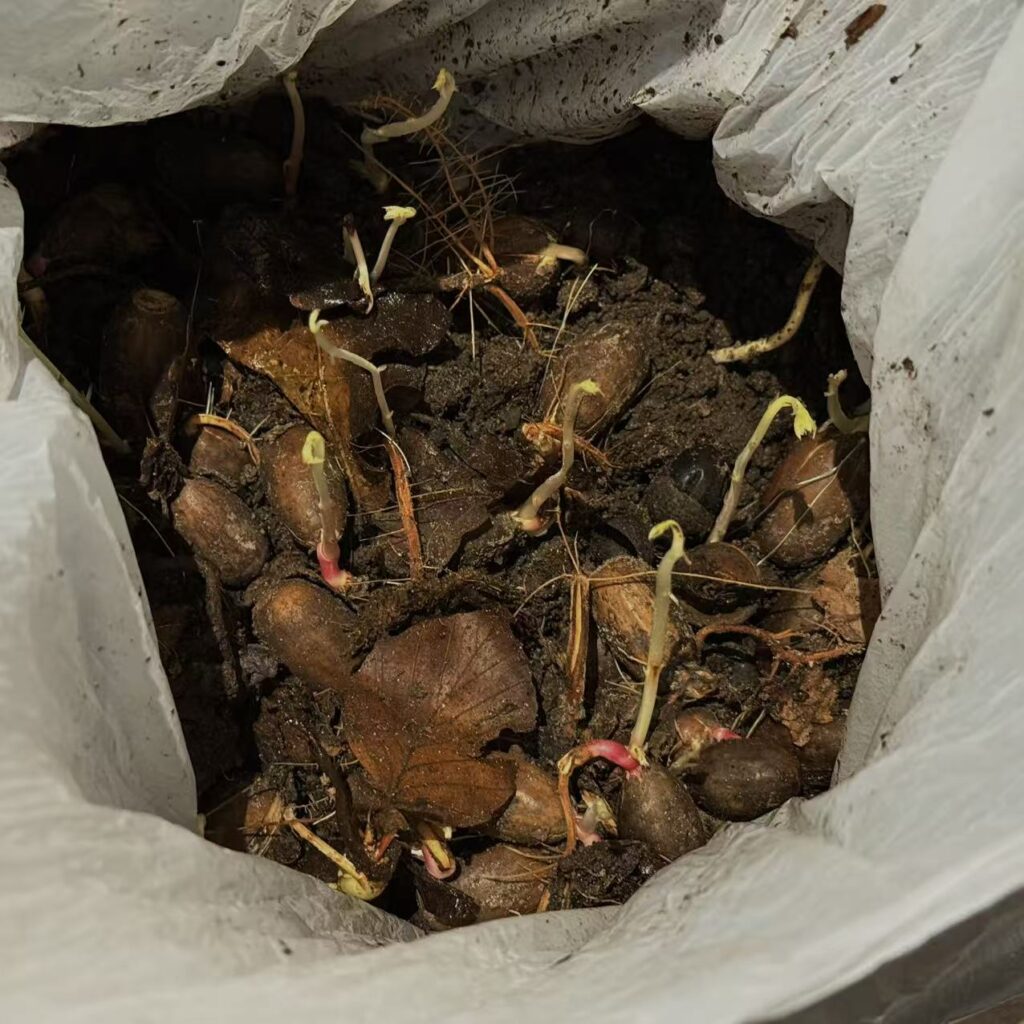
Soil: life bursting forth, sprouts reaching upward. The indoor temperature made the seeds think winter had ended, triggering the growth program early. They grew straight toward the light.
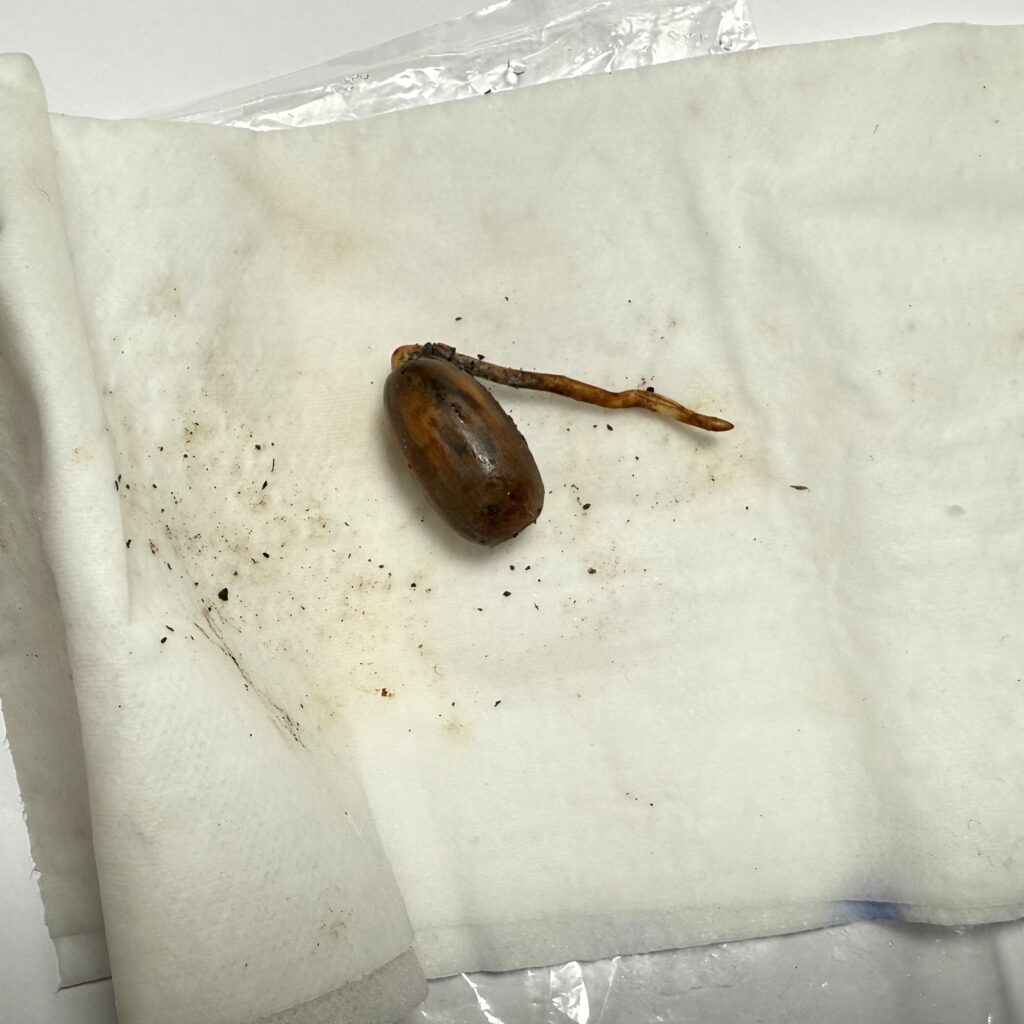
Refrigerator: quiet waiting, slow rooting. To simulate winter, I covered the acorns with a wet tissue blanket and put them in the fridge. Unexpectedly, they adapted well to life in the refrigerator and also sprouted. Perhaps hibernation slowed their growth. Somehow I felt a sense of being trusted.
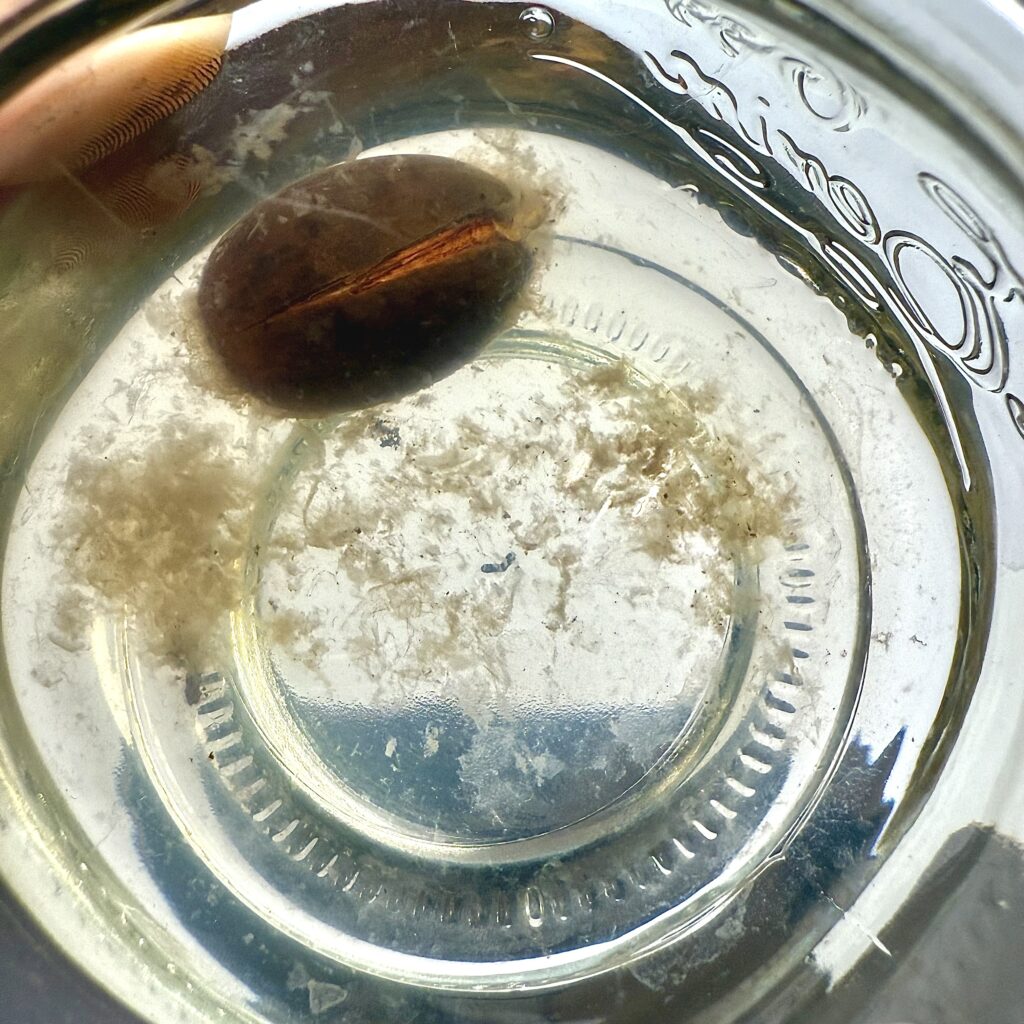
Water: fuzz and mold. As time went on, the fuzz on the acorn grew thicker, but the acorn did not die.
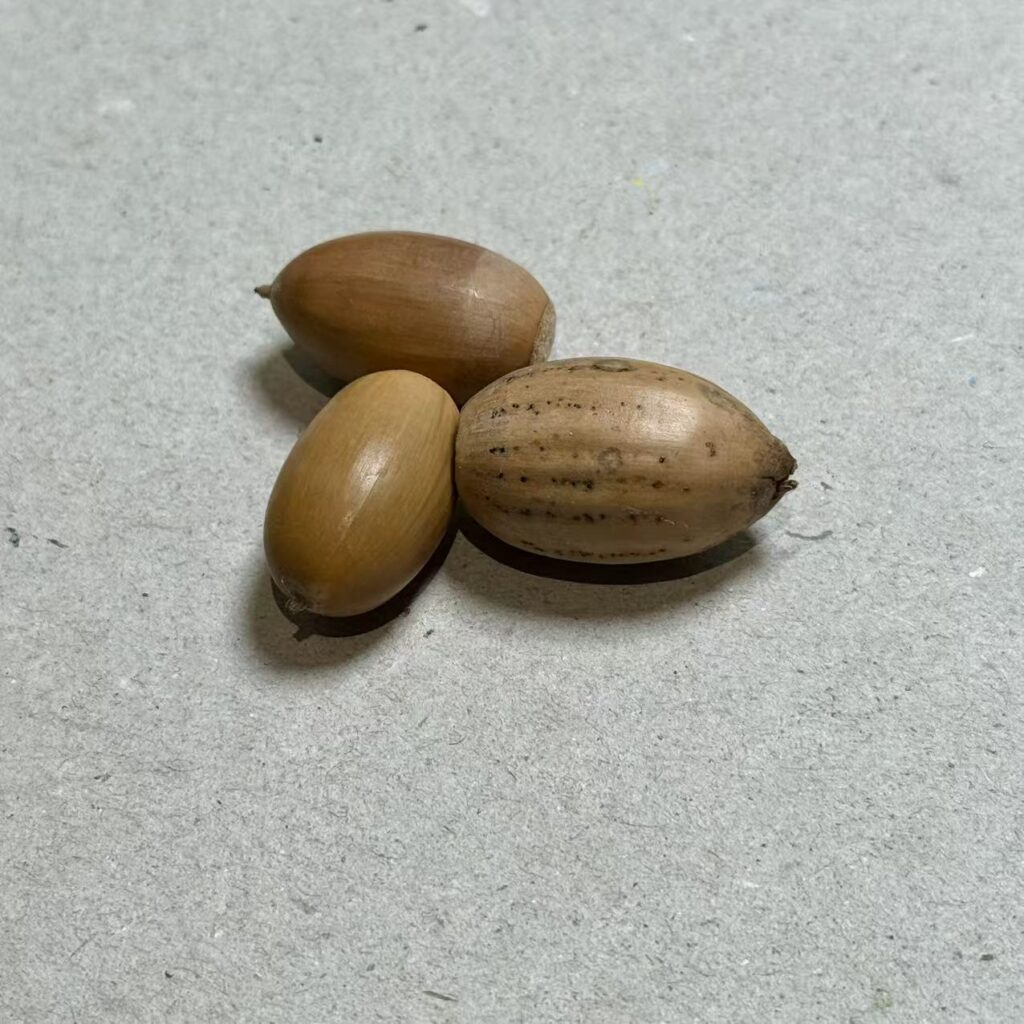
Table: dry and faded. The unsealed acorns on the table clearly looked less fresh. Water loss was obvious. When I picked them up, they felt lighter. The kernel had separated from the shell, and I could hear it rattling inside.
The same acorns, in different environments, have different rhythms of time. This moment, I was not observing the acorns, but accompanying them through different possibilities. I feel I understand them better now. I feel closer to them.
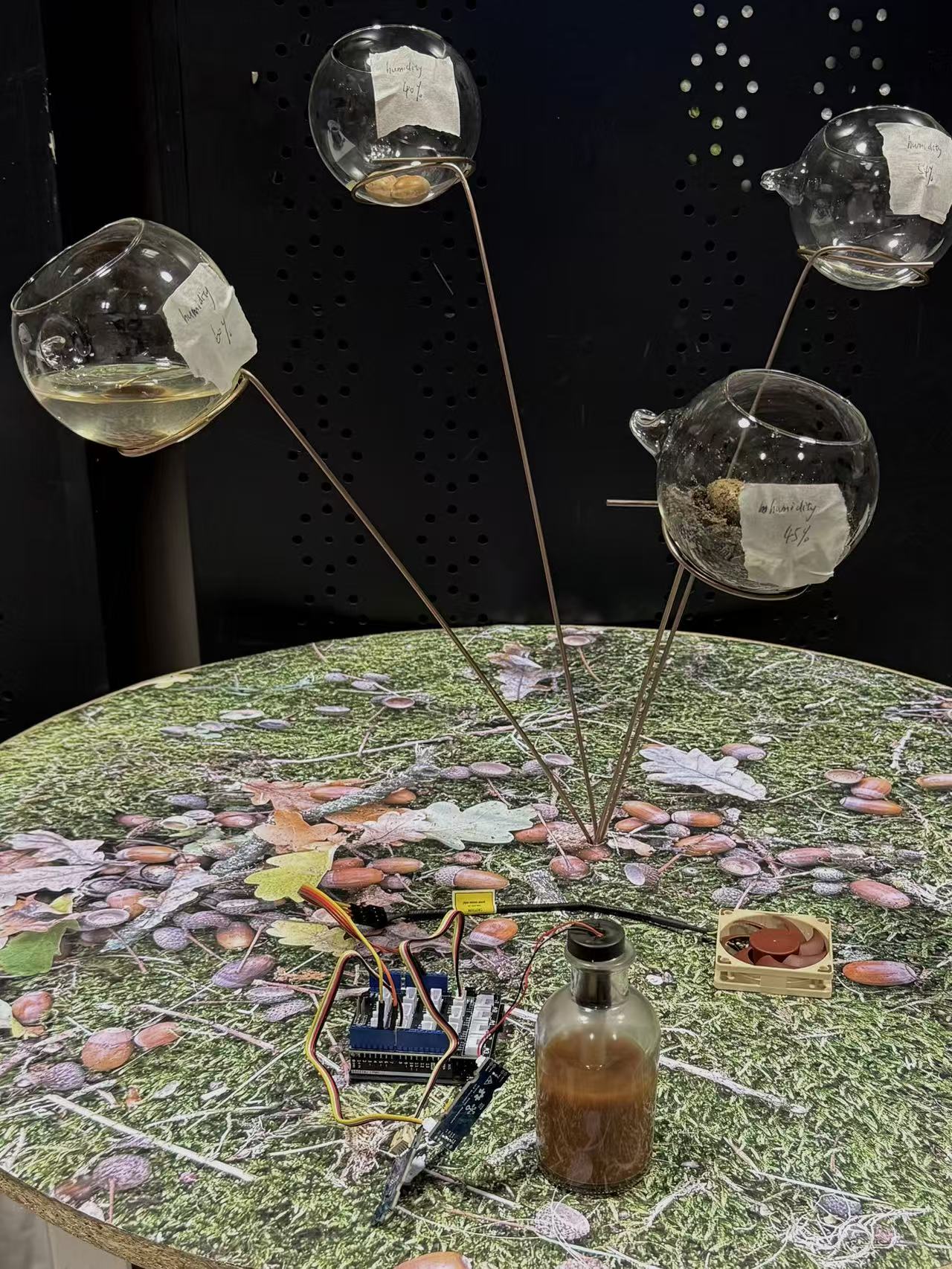
The acorn’s time (life state) felt through the body
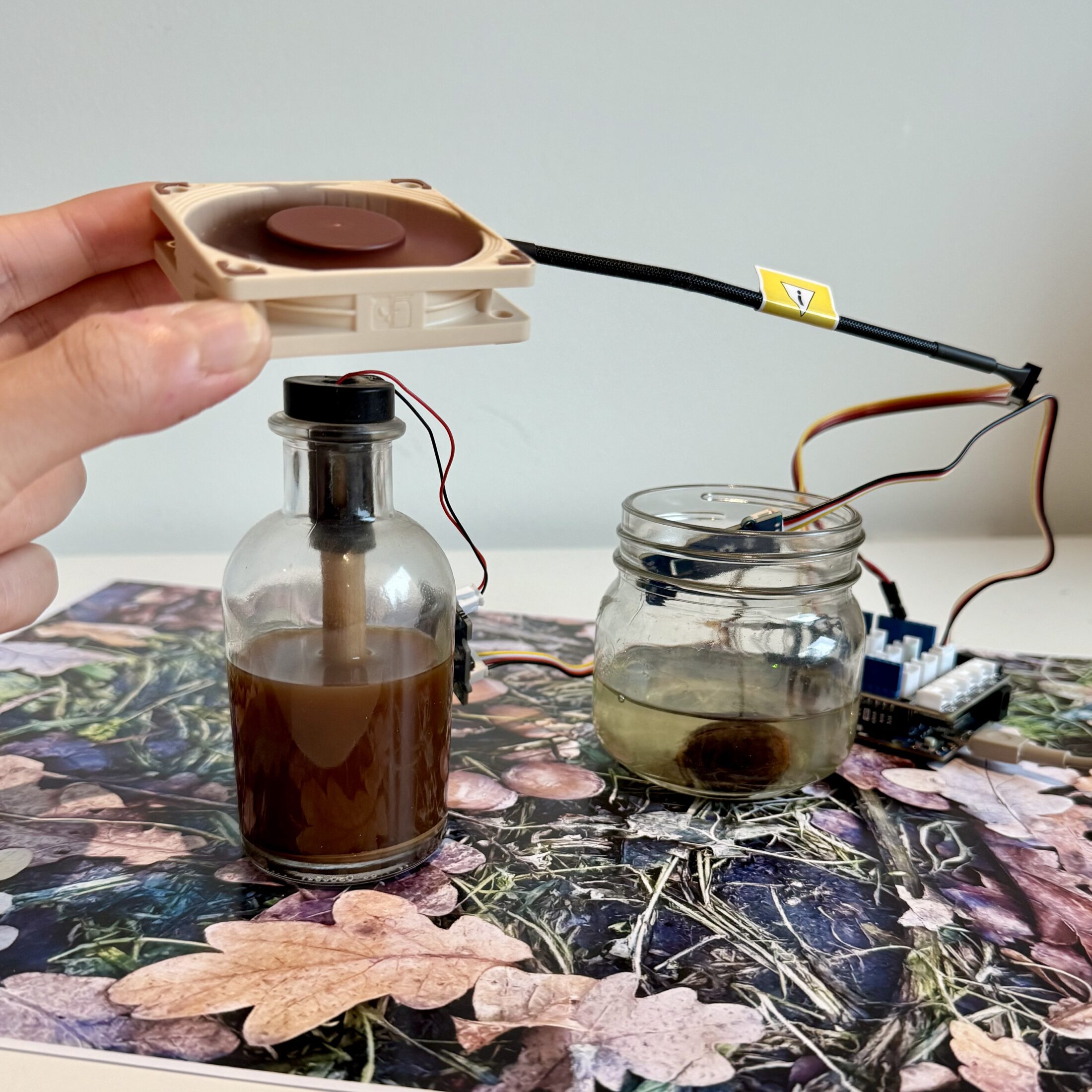
How can the acorn’s time be made visible? How do acorns make animals perceive them? The bitter tannins inside make animals retreat. I think this taste is a proof of its being alive. I tried to extract the tannin scent, to let human smell perceive its life. I peeled off the skin and cap, washed them, and soaked them in alcohol. A week later, the acorn’s smell emerged, overpowering the alcohol. It was magical, a completely new experience for me. Then I tried heating it to evaporate the alcohol. The acorn’s scent became even richer. The whole room was filled with the bitter tannin smell of acorns, as if it brought me back to the forest.
I transformed its metabolism into perceptible material of time. I used humidity sensor data to modulate the intensity of its scent: when moisture decreases, the smell fades; when life is full, the smell is rich. Smell became the material form of time. A cross-species alternative language that allows humans to re-perceive the rhythm of plant life.
Previous