IN
NL
Catherine: “Nelly, I am Heathcliff – he’s always, always in my mind – not as a pleasure, any more than I am always a pleasure to myself – but, as my own being – so, don’t talk our separation again – it is impracticable.”
– Emily Brontë, Wuthering Heights
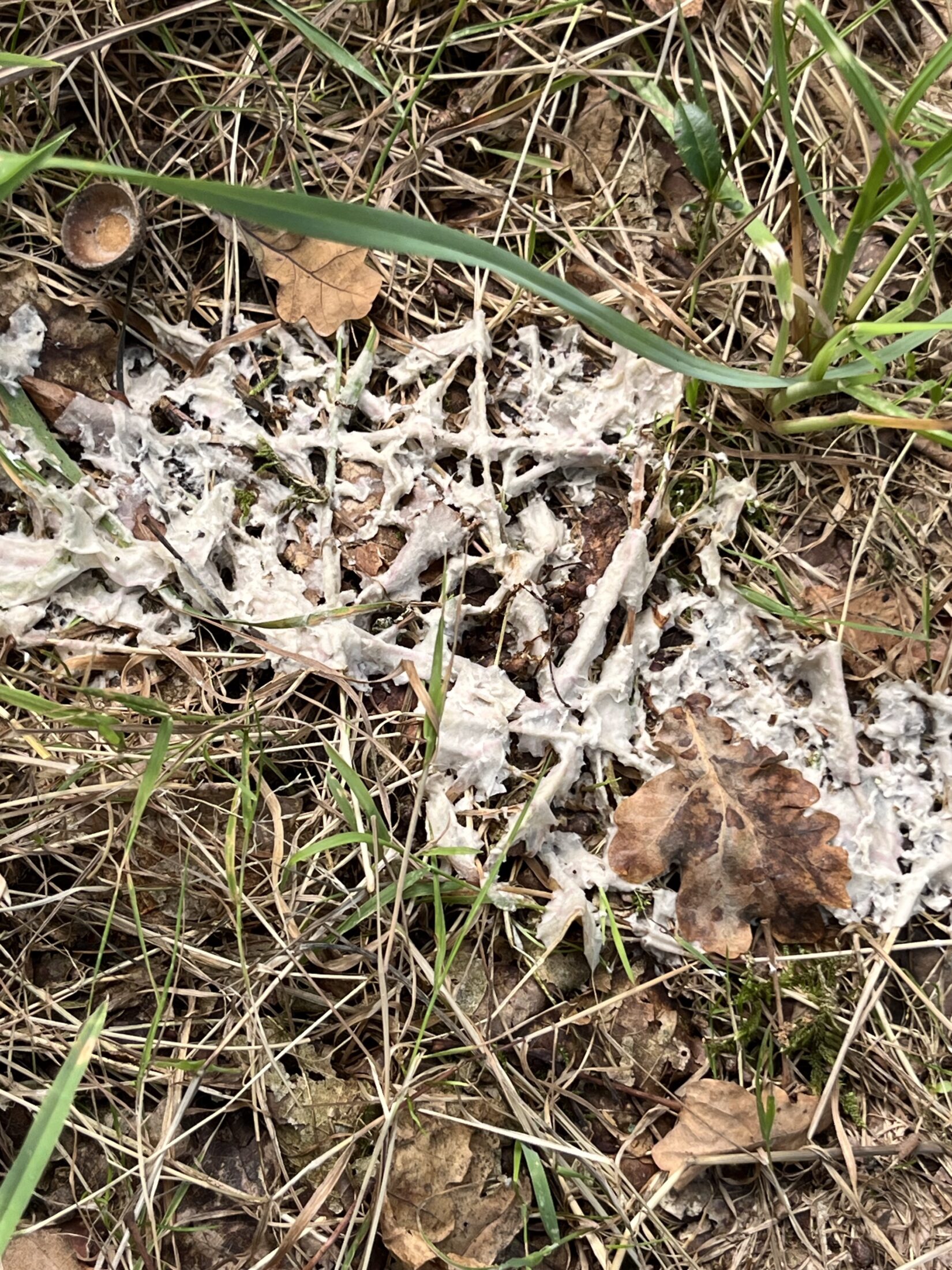
This is one of my favorite forms of binding: disintegrating piece by piece to adhere more viscously to another. A mode of inseparable love.
Prologue. from a piece of wet paper
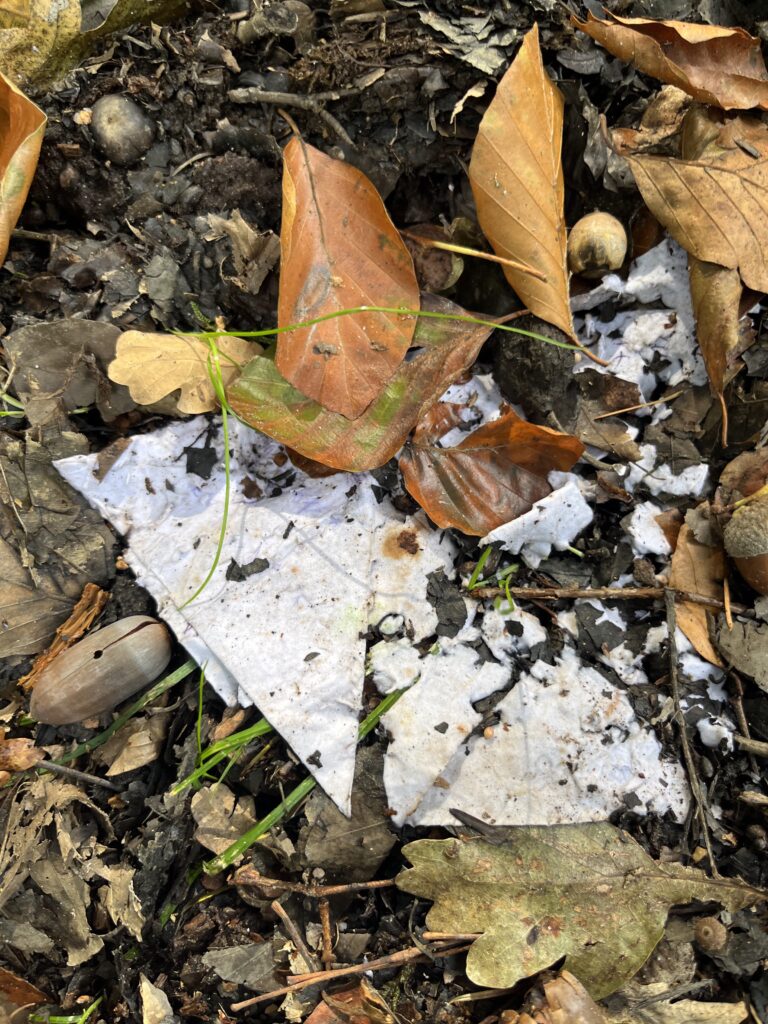
What I first photographed in that forest was a piece of wet paper. Why? What drew me to recognize it?
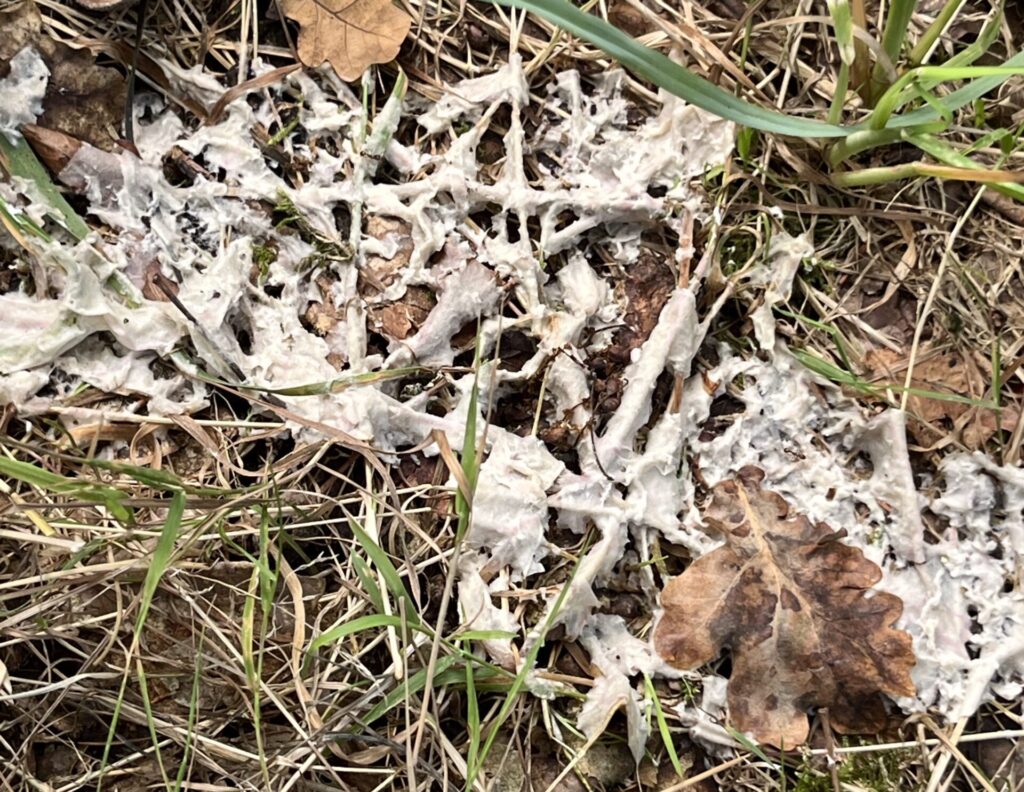
What captured my eyes in that forest was something contaminated. Unrecognizable, “something bound”, a form of binding. What swept through? What time, air, wind, water, cold and warmth. What rendered her unrecognizable?
I don’t ask ( ) name. I don’t ask who ( ) was. I only roam around scenes resembling ( ).
Scene 1. Pancratium Maritinum(Hexandra Monogyna)
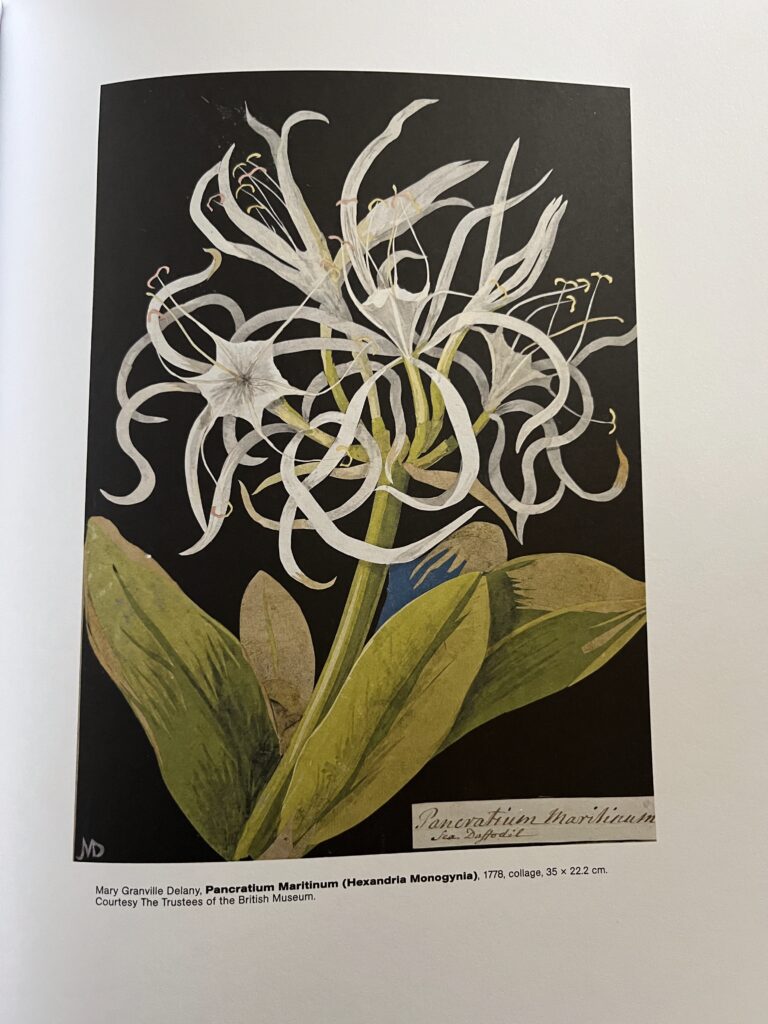
Collage advance contingently, never inevitably. The shapes meander and overlap with each other, creating anti-forms.
A flag’s fluttering white cloth—multiple long strands hanging from a single pole. The strands guide ships in different directions, each strand pulling toward its own course. They remain bound together in one line.
This binding creates both bondage and solidarity. When elements generate a narrative, they produce it contingently, gathering many components by chance. These elements become bound to the narrative through their placement in that space—like individual units in a mosaic. Yet a mosaic unit arrives at its position through chance, not necessity. Each piece can migrate elsewhere. Migration becomes translation. When a piece relocates, it acquires a new name.
우연적으로 나아가는 형태, 필연적이지 않음. 형태가 구불거리고 서로 겹쳐지며 만드는 반-형태.
깃발의 펄럭이는 흰 천, 하나의 기둥에 매달려 있는 여러 가닥의 긴 끈을 떠올리게 한다. 그것들은 서로 다른 방향으로 배를 인도하고, 서로 다른 방향으로 나아가려 한다. 한 줄기로 묶여 있음에도.
그것은 속박이면서 결속이다. 하나의 서사를 만들어낸다면 그것은 많은 요소들이 우연적으로 담긴 결과다. 요소들은 그 장소에 배치됨으로써 내러티브에 속박된다. 모자이크의 한 단위처럼. 그러나 모자이크의 한단위가, 거기 그렇게 있게 된 것은, 필연이 아니다. 그것은 언제든 다른 곳으로이동할 수 있다. 이동은 번역이다. 한 조각이 다른 곳으로 이동한다면 그것은 새로운 이름을 얻게 될 거다.
Scene 2. Shaking, Spreading and Out-focusing
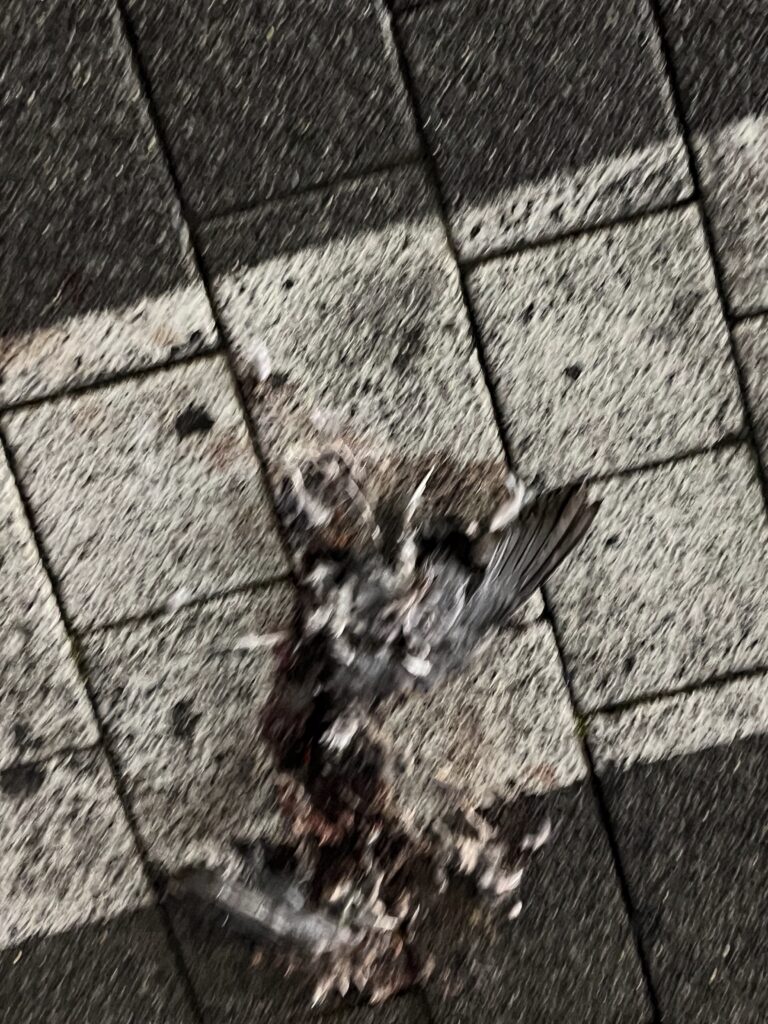
Traces of scattered forms resonate with trembling marks. Out-focused.
Breath holds. The body decomposes piece by piece. In the upper right corner, a wing feather appears or perhaps a fin, suggesting the form once flew or swam, or both. When it touches ground, that movement vanishes like melting snow.
Precise visual fixation fails—the shutter, confronting disappearance, cannot move faster than hands trembling before eternal interruption; the lens, confronting fragmentation, cannot look forward until everywhere blurs, until there is nowhere to rest the gaze. After dwelling long with this image, finally, no sadness remains, for this is simply a process of transformation.
흩어진 형태와 공명하는 흔들림의 흔적. 그리고 초점 없음.
참는 숨. 낱낱이 분해되는 몸. 오른쪽 상단에는 날개의 깃이, 혹은 지느러미가, 그것이 과거에 날았거나 또는 헤엄쳤거나, 또는 그 둘 다거나, 그러나 지상에 닿으면 그 움직임이 눈 녹듯 사라짐을 암시한다.
정확한 시선 고정의 실패—사라짐을 마주한 셔터는 그 영원한 중단을 맞닥뜨린 손의 떨림보다 빠르지 못하다; 분열을 마주한 렌즈는 눈을 둘 곳이 없어 모든 곳을 흐릿하게 만들기 전에는 정면을 바라볼 수 없다; 내가 그 사진과 오랫동안 함께 거한 뒤, 그러나 거기에는 슬픔이 없는데, 단지 변환(transformation)하는 과정일 뿐이기 때문이다.
Scene 3. Bed Reading Spread
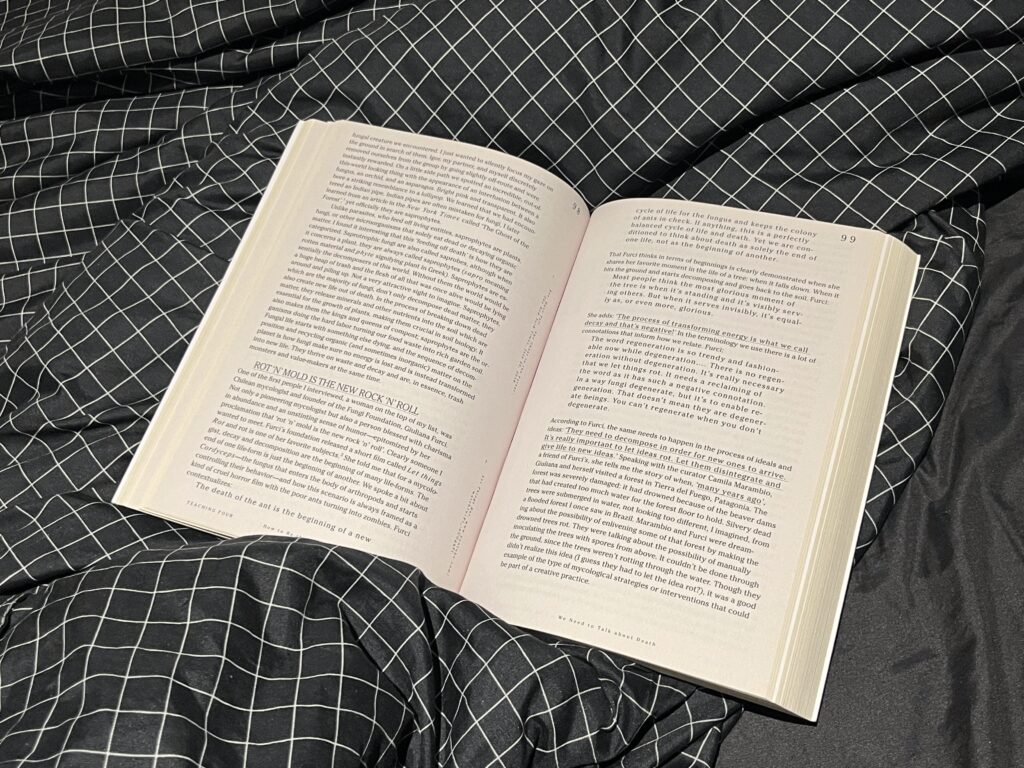
I often fall asleep with a book covering me. One summer day in my childhood, when a typhoon was fiercely blowing, I lay in bed reading Wuthering Heights. When I fell asleep dwelling within the book, the smell of its flesh would wash over my nose. The book covering my face became a roof for my face. In that storm, Wuthering Heights was both shelter and home to me.
Wuthering Heights narrates love as accepting another being as one’s own. Perhaps the most impressive scene in this book is Heathcliff opening the window, crying out for Cathy’s ghost to enter. But Cathy’s ghost doesn’t appear. Instead, with the gust of wind come uninvited leaves, seeds, insects willingly entering his room. Heathcliff, unconcerned, unknowingly extends his hospitality to them.
I associated “Something bound” with a book because it resembled the bones of a book that move to disappear. My eyes can discover books everywhere, because I regard books as home and long for them. I feel sheltered by books and feel lust toward them.
From this,
I wondered whether Wuthering Heights could become home for other beings as well.
What if binding is not the final step to preserving the book from contamination, but the condition for it?
How can the book become home through binding(as contaminated container)?
Practice and Methodology
Material Witnessing and Contamination as Method
1. Material Witnessing
For Susan Schuppli, witnessing means excavating what materials record and interpreting through multiple layers via forensic decoding of physical and chemical states.
In my research, witnessing means observing decay while dwelling with it: engaging texture and smell, searching for similar states, constructing narrative constellations.
I placed Wuthering Heights as the informant’s objective correlative at the site for three days, observed its transformation, and am writing stories from it.
2. Contamination as Method
When “it” contaminates the forest, what relations might “it” form?
Reading Anna Tsing’s conceptualization of “contamination,” I sought to develop more specific definitions and create writing methods where informant(s)’ language participates. I kept language forms open, ultimately viewing their traces as language itself and naming it “contaminated écriture.”
contaminated écriture, contaminated container
Countless traces were bound in the book. I view the life traces left by non-humans inhabiting books as “contaminated écriture.” Their daily routines inscribed on pages, the book’s form transformed by their metabolism: these traces become writing. If Derrida’s “écriture” is any act that simultaneously repeats and differentiates, what happens when we apply this to non-humans? Traces left through their repetitive acts can become écriture, or writing.
‘Binding’ is the site that provides the field for contaminated écriture. Binding is also the phenomenon emerging through contaminated écriture. Binding is the contaminated container holding contaminated écriture.
Conventionally, binding is the final step completing a book in book design. After this stage, books gradually age and die. But in the future archive, what will books moving toward ‘binding’ contain?
Books contain different content moment by moment, renewing themselves as storage.
Books transform into homes, into dwellings feeding and sheltering non-humans.
Books finally become so viscous they cannot separate from what they contain, metamorphosing into fierce love, into “binding.”